Trans-Himalayan Research Expedition: Dolpo 2026

Statement of Expedition Purpose
We are a group of researchers primarily from the University of Hawai'i Mānoa participating in a research and community health trip this upcoming July 2026 in the Himalayan region of Dolpo, Nepal. Kindly scroll to the bottom of the page to read our full project description.
Our partners:
https://www.uberoireligiousstudies.org/
Dolpo Amchi Rinpoche Trust Foundation: https://dolpoamchitrust.org/
Our Promotion Video
Click This Image to Watch!

Making a Donation
For donations of $500 or more, we offer tax-deductible status through our Non-Profit partner L.A. Net. To donate to our non-profit, please make a check out to "L.A. Net Community Health Resource Network for the Benefit of the Trans-himalayan Research Expedition" mailed to 3724 E 3rd St., Long Beach, CA, 90814 where our non-profit is headquartered.
Subsequently, we will mail a tax document with our employer identification number so that the tax exemption can be claimed.
We kindly ask that small donations (<$500) be made to our GoFundme, found here: https://gofund.me/81d1d4a37
Alternatively, please email our team for any project or donation questions and we will be happy to assist. Please email rsee@hawaii.edu and nikhils@hawaii.edu
Your Donation Makes a Tangible Difference
Our primary costs are as follows for each respective project:
Agricultural Initiative:
Seeds, Mule, and transportation: $3,000
Sowa Rigpa Traveling Medical Clinics
Compensation to guides, translators, and practitioners: $4,000
Logistical Costs:
Permitting, Safety Insurance, Transport fees: $15,000
Total costs: $22,000
As a Thank You for supporting our project, we offer collaborative benefits to our donors.
Donations of $500 or more:
Are offered access to our professional expedition photography to use for you or your company to use for promotional purposes. Additionally, you will receive a post-expedition reflection from our team members describing how your contribution helped make a direct impact on our project and the community in Dolpo.
Donations of $1,000 or more:
Including the benefits mentioned above, donations of $1,000 or more grant access to our video logs, which will detail the joys, frustrations, and progress of our expedition. Allowing you to feel as though you are part of the team!
Donations of $2,000 or more:
For donations of $2,000 or more, we offer personalized packages providing you with exclusive photography dependent on your personal or company promotional needs. Contact us for more information!
Project Overview
We are a team of researchers from the University of Hawaii conducting a community-based participatory research project in the trans-Himalayan region of Nepal. 2026 will be the third phase of a three-year project, with 2024 and 2025 trips to Upper and Lower Dolpo, a trans-Himalayan region in northwestern Nepal. Previous phases of this project have been focused primarily on understanding kinship and agency systems with non-human others, and theorizing pilgrimage practice as an embodied technique for reading the land-as-text. This year, we will be returning to continue exploring the broader themes of an Indigenous Tibetan Buddhist land ethic, though through the lens of architectural art, medicine, and environmental practice.
As a team, we have a total of five individualized projects tailored to each group member's area of expertise. Our primary goal is to map and survey monasteries for future restoration projects, while the other four projects include a traveling Sowa Rigpa health clinic, an agricultural project, a wildlife survey, and finally an anthropological survey of tourism impacts in Dolpo. Our research happens in partnership with our community experts - namely, Dolpo Amchi Namgyal Rinpoche and his daughter, Tsering Sangmo Lama and the Dolpo Amchi Rinpoche Trust Foundation. Our vision and various projects come from Namgyal Rinpoche’s tireless commitment to his community through cultural perpetuation, environmentalism, and wellness. Additionally, our upcoming 2026 trip to Dolpo is only made possible through our collaborative partners: the Uberoi Foundation for Religious Studies and the Department of Religion at the University of Hawaii at Manoa. Uberoi Foundation has generously provided financial support for previous years, but as our mission has grown, so have our financial needs, which is why we are now expanding into non-profit service work. For additional information on our research team from Hawaii, including each participant's qualifications and area of expertise, please refer to the personal bio handout.
Map of Dolpo:
Primary Project: Monastery Mapping and Its Significance in Tibetan Culture
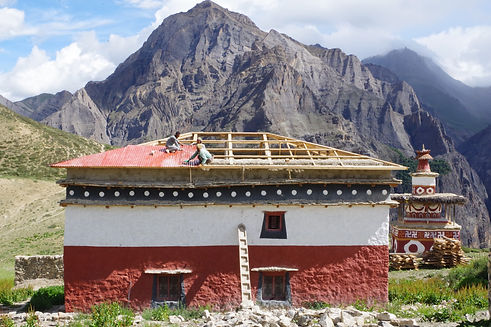
Our central focus is mapping the local monasteries. This includes taking GPS coordinates, detailed oral histories, discovering what textual corpses are stored in each, photographing the frescoes and architecture, and assessing the structural damage and needed repairs. Our primary locations for monastery mapping include Ringmo, Doh-Tarap, and Saldang. All locations fall inside the Shey-Phuksundho National Park, and are accessible through the trekking routes starting at Juphal. Dolpo is still not accessible by road; therefore, our research team will be trekking in, traveling first through Lower Dolpo.
Tibetan Buddhists view monasteries as more than religious buildings; they are cultural centers for religious, spiritual, and physical healing that are geomantically charged and strategically placed to mediate harsh environmental energies. Tibetan Buddhists use a variety of dialectics to explain the teaching of interdependence. One such paradigmatic cultural notion is the non-difference of inner and outer appearances. In this sense, just as we have energy centers and blood vessels in our bodies, the land is identified as a body, with the monasteries and stupas occupying specific energetic points, while the rivers and fields constitute the subtle and gross elements of the biotic body (loka or jikten). The health of the biotic body and the health of the human inhabitants are intimately linked.
We intend to use what we learn in mapping the monasteries to create a digital register of sacred spaces, particularly one that can be accessed by international funding sources for the purposes of monastery restoration. Most of the monasteries are approaching 700 years old, with exquisite frescoes adorning their interior walls. In some cases, simple renovations such as new monastery roofs could preserve these important cultural treasures.
Sowa Rigpa Health Clinics
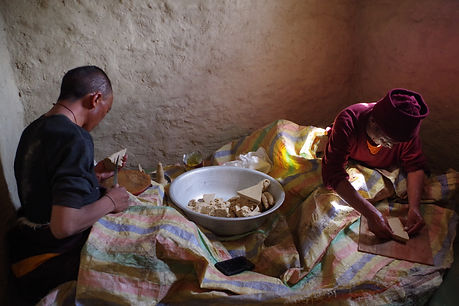
Tibetan medicine or Sowa Rigpa is the primary medicinal tradition in the trans-Himalayan region of Nepal. There, local communities seek religious guidance as well as healthcare from a Tibetan doctor known as an amchi. Amchi practice a form of medicine called Sowa Rigpa that combines elements of Ayurveda, Traditional Chinese Medicine, Buddhism, and indigenous spirit-medium techniques. Sowa Rigpa is one of the ten Buddhist sciences, and unlike Western science with its tendency to bifurcate the world into “science” and “religion”, Sowa Rigpa is grounded in the basic Buddhist teachings of interdependence, in which all things are empty of an inherent essence and rise through mutually coextensive systems of cause and effect. This view of interdependence informs how trans-Himalayan communities approach health, as wellness is mediated through community ties that extend beyond human kin into the more-than-human world. Our goal of understanding the nuanced ways in which traditional religiously informed rituals embed human persons into the larger biotic community is supplemented by our commitment to a pedagogy that sees true knowledge springing from reciprocal service-based engagement. Knowledge creation is highly political, and the ways in which we approach knowledge production and perpetuation inform not just which stories get told but also shape the politics of information exchange. Rather than extractive practices, we center community goals and local experts, working alongside each other in ways that are mutually beneficial.
As we walk from village to village on our monastery mapping pilgrimage, our guide and translator, Tsering Sangmo will be providing health services to local elders. Although antibiotics are now widely available, traditional plant medicines and behavioral practices prescribed by Sowa Rigpa doctors would better suit the local populations. Healthcare is difficult to access, as travel across the rugged mountain passes to health posts is not possible for the elderly and infirm. Many local people also lack traditional cultural knowledge of how to maintain healthy bodies and minds. Tsering will be able to administer medical care, as well as provide basic health consultations, as we travel.
Agricultural Project
Our agricultural project is the third pillar of our community service initiative aimed at fostering reciprocal relationships with the local Dolpo community. The climate in the trans-Himalayan region has shifted; therefore, locations that could only grow barely before are now able to support a larger variety of vegetable crops. Seeds are difficult to bring to Dolpo, and many seeds imported from India are not perennially viable, which has contributed to widespread famine and economic devastation in other trans-Himalayan regions like Zanskar. We will be hiring mules to bring in sustainable, organic, heirloom seeds from Kathmandu and distribute them to the population of Doh-Tarap. The typical local diet in Dolpo is barely flour (called tsampa), potatoes, butter, and noodles imported from China. The sudden influx of highly processed food, and the hundreds of miles fresh vegetables have to travel from the market at Dunai has created a food desert where local populations are increasingly forced to rely on low-quality, nutrient-poor foods to survive. By providing them heirloom seeds free of charge, we hope to empower this and future generations to grow sustainable, healthy vegetable crops.
Supplemental Academic Surveys
The above three primary mission objectives provide the service learning aspect of our research expedition. In addition to these, we have three academic projects run by M. Bannister, Aryeh, tenBroek, and C. Cole. The topics include a survey of Zhang Zhung textual resources at Samling Monastery, a survey of small-scale locally managed tourism practices, and the WWF (World Wildlife Foundation) role in mitigating human-wildlife conflict. By bringing attention to these various dimensions of life in Dolpo, we hope to counteract the erasure that so often happens to Indigenous communities caught between large nation-states and the globalizing forces fueled by cash economy imperatives. We highlight Indigenous systems of knowledge creation, agency, autonomy, and ingenuity, while bringing tangible resources into the community to support their development goals.
Our Financial Need
For the above projects to achieve their fullest impact, we are seeking funds for research equipment to map the monasteries; seeds and mules to bring into Dolpo for our agricultural initiative; compensation for our local guides, translators, and medical practitioners; finally, as Dolpo is such a remote region, we aim to insure upmost safety and responsible research and thus proper safety equitment such as a satalite phone, helecopter inssurance, and permiting are required to conduct our expedition.
Statement of Expedition Purpose

Our Team Bios
Dedication. Expertise. Passion.

Rachel See
Lead Researcher
Rachel See has extensive research ties in the Dolpo region of Nepal, as she earned a BA in Tibetan Buddhist Philology from Rangjung Yeshe Institute, the Buddhist Studies Center of Kathmandu University. During her years in Nepal, she worked with and learned from Tibetan Buddhists living in diaspora near the Boudhanath Stupa, in particular those community members from Dolpo. She is currently an MA student in the Department of Religions and Ancient Civilizations at the University of Hawaiʼi Mānoa. Her MA research has brought her to Dolpo fully funded for the past two years, and this year, she is bringing our team to meet our community engagement objectives, including mapping important monasteries, facilitating health clinics, agricultural projects, anthropology of tourism, and wildlife assessments.
Her academic interests include the symbolic construction of place; pilgrimage, the chthonic realm, and geomancy. Her current research is on the embedded sacredness of the Himalayan Buddhist landscape, specifically Nyingma and Bon communities in the trans-Himalayan area of Nepal. Her language specializations are Colloquial and Classical Tibetan, Nepali, and Sanskrit

Tsering Songmo Lama
Guide, Translator, Amchi
Tsering Sangmo Lama is a native of Dho Tarap in Dolpo, where Sowa Rigpa remains a primary source of healthcare. She holds a Bachelor’s degree in Sociology, Anthropology, and Economics from Tribhuvan University, and a Bachelor’s degree in Sowa Rigpa Medicine and Surgery from Sowa Rigpa International College (affiliated to Lumbini Buddhist University). She previously served as a lecturer and administrator at Sowa Rigpa International College, contributing to academic development and training in traditional medicine. She currently works as a coordinator with the Dolpo Amchi Rinpoche Trust Foundation, cultural heritage preservation, supporting health, education, and community initiatives in the Himalayan region of Dolpo.
In addition to her coordination role, Tsering will contribute to community outreach by delivering public health awareness sessions and providing basic care through Sowa Rigpa herbal practices. Her work is especially informed by her interest in addressing health challenges such as Hepatitis B in remote Himalayan populations, where access to biomedical healthcare and health education remains limited.
Tsering’s role bridges academic research and community knowledge, ensuring that the project remains culturally grounded, ethically engaged, and responsive to local needs. Her long-term vision is to contribute to the integration of Indigenous health systems into global health discourse, while supporting sustainable health and education initiatives.

Nikhil Stewart
Photographer and Digital Resources Manager
Nikhil Stewart obtained his bachelors in Religious Traditions and Political Science from the University of Hawai’i Mānoa in 2025 and will be entering the Masters of Arts program at the University of Chicago Divinity School in fall 2026. His most recent research project was an ethnographic study in the Kathmandu Valley seeking to understand the relationship between social media and Tibetan Buddhist monastic life. His research interests broadly consist of Sanskrit studies, Buddhist studies, history of political thought, semiotics, and ethnography. This summer he will be in charge of all digital resource management and photography/videography. These include photographing monasteries, artifacts, art frescos, daily video vlogs, along with file management.

Mary Bannister,
Anthropologist
Mary Bannister, MA is a PhD student in the Anthropology department at the University of Hawaiʻi at Mānoa. Her research interests include anthropology of adventure, more-than-human ethnography, and Indigenous, anti-colonial, and feminist relations to land. A long-distance hiker, Mary has walked more than 3,000 miles on five continents, and has written about hiking as an embodied research methodology for environmental anthropology. She has field research experience in India, Kenya, Jordan, and the United States. During four previous extended trips to Nepal and the Indian Himalaya, Mary cultivated a love for mountains and an interest in the ways people move through them. This summer, Mary will conduct exploratory dissertation research about emerging trekking tourism in Dolpo. She aims to understand how people in Dolpo are creating ethical community-based eco-tourism futures. She will also assist with trip management and logistics.
Aryeh tenBroek
Botanist, Linguist
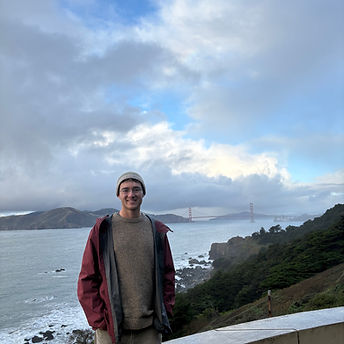
Aryeh tenBroek is an undergraduate student in the College of Tropical Agriculture and Human Resilience at the University of Hawaiʻi at Mānoa, pursuing a Bachelor of Science in Tropical Agriculture and the Environment. In addition to his studies in agricultural and environmental science, Aryeh has been exploring lifelong interests in language, religion, and philosophy at UHM; helping to develop the university’s Classical Tibetan language program and participating in its first Nepal-Himalaya research and study abroad trip in summer of 2025. This summer he will be returning to Nepal to research the use of the ancient language of Zhangzhung by Bon religious communities in the Dolpo region, as part of a project at the intersection of linguistic anthropology and religious studies. Aryeh will also be leading an initiative to introduce new food crops to the village of Dho Tarap in Dolpo, in hopes of strengthening food security in rural Himalayan communities.

Charles Cole
Geographer and Environmentalist
Charles Cole is an undergraduate student studying Geography and Environment at the University of Hawaiʻi at Mānoa, where his work focuses on the relationships between ecological systems, cultural practices, and conservation governance. Charles is broadly interested in understanding how complex systems function, particularly how human communities are embedded within ecological processes rather than separate from them. His field experience includes a month of ecological research in Scotland, where he conducted intertidal biodiversity surveys and monitored marine mammals across multiple coastal regions in collaboration with the University of St Andrews and the Scottish Oceans Institute. He also leads an independent conservation initiative documenting and mapping segments of the California Coastal Trail, highlighting environmental pressures and advocating for equitable public access to natural landscapes. This summer, Charles will conduct field research in Upper and Lower Dolpo as part of the Nepal Himalaya Student-Led Research Collective. His project examines human–snow leopard coexistence, focusing on how pastoral livelihoods, Indigenous ecological knowledge, and conservation initiatives interact across shared landscapes.

Dr. Michel Mohr
Faculty Advisor
Education
University of Geneva, Switzerland, Ph.D. (Doctorat ès Lettres), 1992
University of Geneva, Switzerland, Licence ès Lettres in History of Religions, 1982 (similar to an M.A. in the American academia)
Address
For check mailing, please mail to 3274 E 3rd St., Long Beach, CA, 90814 in the name of "L.A. Net Community Health Resource Network for the Benefit of the Trans-himalayan Research Expedition."
Phone
+1 (562)-334-8286
For project inquires contact our Lead Researcher, Rachel See:
For donation and technical support contact our Digital Resource Manager, Nikhil Stewart: nikhils@hawaii.edu